Alexander J. McKelway, Child Labor and Southern Textile Economy.
By: Miriam Izbicki-Wilson maizbickiwilson@liberty.edu
Introduction
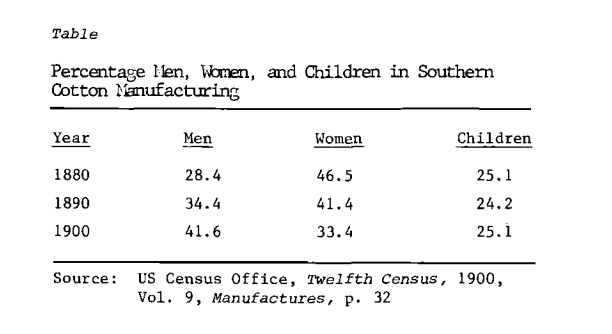
Between 1900 and 1929, the textile industry reshaped the economy of the American South, but growth came at a terrible cost for many children. In the Carolinas, Alexander J. McKelway became one of the most visible reformers challenging mill labor practices. His work mattered because he did more than criticize child labor in general. He gathered evidence, exposed the daily conditions, and argued that the system harmed children, families, and the region’s future. In Like a Family: The Making of a Southern Cotton Mill World, Jacquelyn Dowd Hall and other authors explain that mill owners promoted a “family labor system” in which children’s work was normalized as a financial necessity. While his system provided economic stability for struggling families, it also perpetuated cycles of poverty and limited access to education. McKelway fought to break this cycle and give children the chance at an education and a childhood.
Research Methodology and Sources
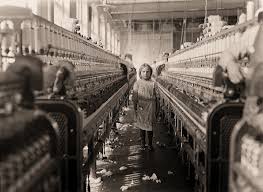
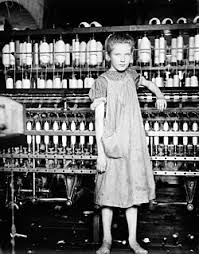
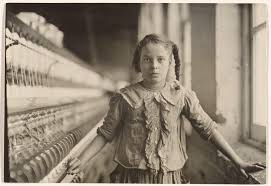
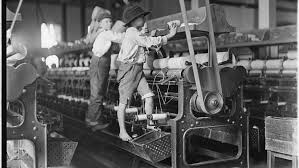
This research draws on reform writing, labor photography, and scholarly research to examine how child labor functioned in the southern textile economy and why McKelway’s activism mattered. The evidence is especially strong because it combines written investigation with visual documentation. Lewis Hine, while working for the National Child Labor Committee, documented the working and living conditions of children in the United States between 1908 and 1924. By combining reform writing, photography, and economic evidence, it shows how images of children working dangerous machines helped parents see their own children in those conditions, changing public opinion and giving a human face to child labor.
Mill Work and Family Economy
The economic system of the southern cotton mill depended on family labor. Reformers and later scholars both pointed to the same basic problem: wages were so low that families often relied on their children’s earnings. One study of Carolina mills quoted the reality directly: “At the present rate of wages paid, large families are compelled to put all their children in the mills in order to support the family.” That statement helps explain why child labor persisted even when reformers exposed its dangers. It was not just a matter of individual choice; it was built into the wage system.
What Child Labor Looked Like Inside the Mills
McKelway and other reformers did not describe child labor as occasional light work. They presented it as exhausting, routine, and harmful. One description from the period observed, “The children work twelve hours on a night shift.” Another detail is equally striking: they “eat-a-workin’.” These phrases are powerful because they show not only long hours, but also how completely the workday controlled a child’s body and time.
The system also damaged education. McKelway’s reporting emphasized what happened when children spent their days and nights in mills rather than in classrooms. In one account, “many boys and young women could not spell their own names.” That is not simply a criticism of one employer or one town. It is evidence that child labor undercuts literacy, schooling, and longer-term opportunity.
Photography: the power of visual evidence
McKelway’s reform campaign gained force because it was supported by investigation and photography. Hine’s images helped transform child labor from the abstract issue into a visible public problem, As Lewsi Hine put it .”The object of employing children is not to train them, but to get high profits from their work.” The line goes to the heart of the economic argument. Child labor was not defended because it benefited the family or the children. It was defended because it served production and profit.
Images mattered because they gave reformers credibility with readers and lawmakers. One contemporary claim about the camera force argued that “the photographic figures of the camera is unassailable.” In other words, reformers believed that photographs could make denial much harder. It also gave a face to child labor. Hine’s work and McKelway’s advocacy together created a moral and economic case that reached beyond local mill towns.
Why McKelway’s Argument Mattered
McKelway’s campaign mattered because he challenged the idea that economic growth justified the labor of children. He pushed readers to see that the same system praised for industrial progress also produced overwork, weak schooling, and generational poverty. A modern scholarly summary of the period notes that debates over child labor “brought to the fore opposing visions of labor, freedom, morality, and the market.” That is exactly why McKelway belongs in the history of the southern textile economy. He was not only criticizing one abuse. He was challenging an entire economic order. McKelway steadily expanded his fight against child labor in the South. Through newspaper editorials, public campaigns, and later his work with the National Child Labor Committee, he pushed for stronger laws to protect children working in mills. With support from other reformers, he helped build public pressure for laws that raised the working age limit, reduced hours, and linked work to school attendance.
Conclusion
Alexander J. McKelway’s fight against child labor reveals the tension at the heart of the New South: rapid industrial growth on one side, and the exploitation of children on the other. The evidence shows that mill families often needed every paycheck, but it also shows the human cost of that dependence. Children “work twelve hours on a night shift.” They “eat-a-workin’.” “Many boys and young women even could not spell their own names.” Those lines explain why reform was necessary and why McKelway’s work still matters in the history of labor, reform, and industrial capitalism.
References
Hine, Lewis. Quoted in “Teaching With Documents: Photographs of Lewis Hine.” National Archives.
Library of Congress. “National Child Labor Committee Collection.”
McKelway, Alexander J. Child Labor in the Carolinas. Documenting the American South, University of North Carolina.
Hall Jacquelyn Dowd, James Leloudis, Robert Korstad, Mary Murphy, Lu Ann Jones, and Christopher B. Daly. Like a Family: The Making of a Southern Cotton Mill World. Chapel Hill: University of North Carolina Press, 1987.
Holleran, Philip M. “Family Income and Child Labor in Carolina Cotton Mills.” Social Science History. Cambridge University Press extract.


Leave a comment